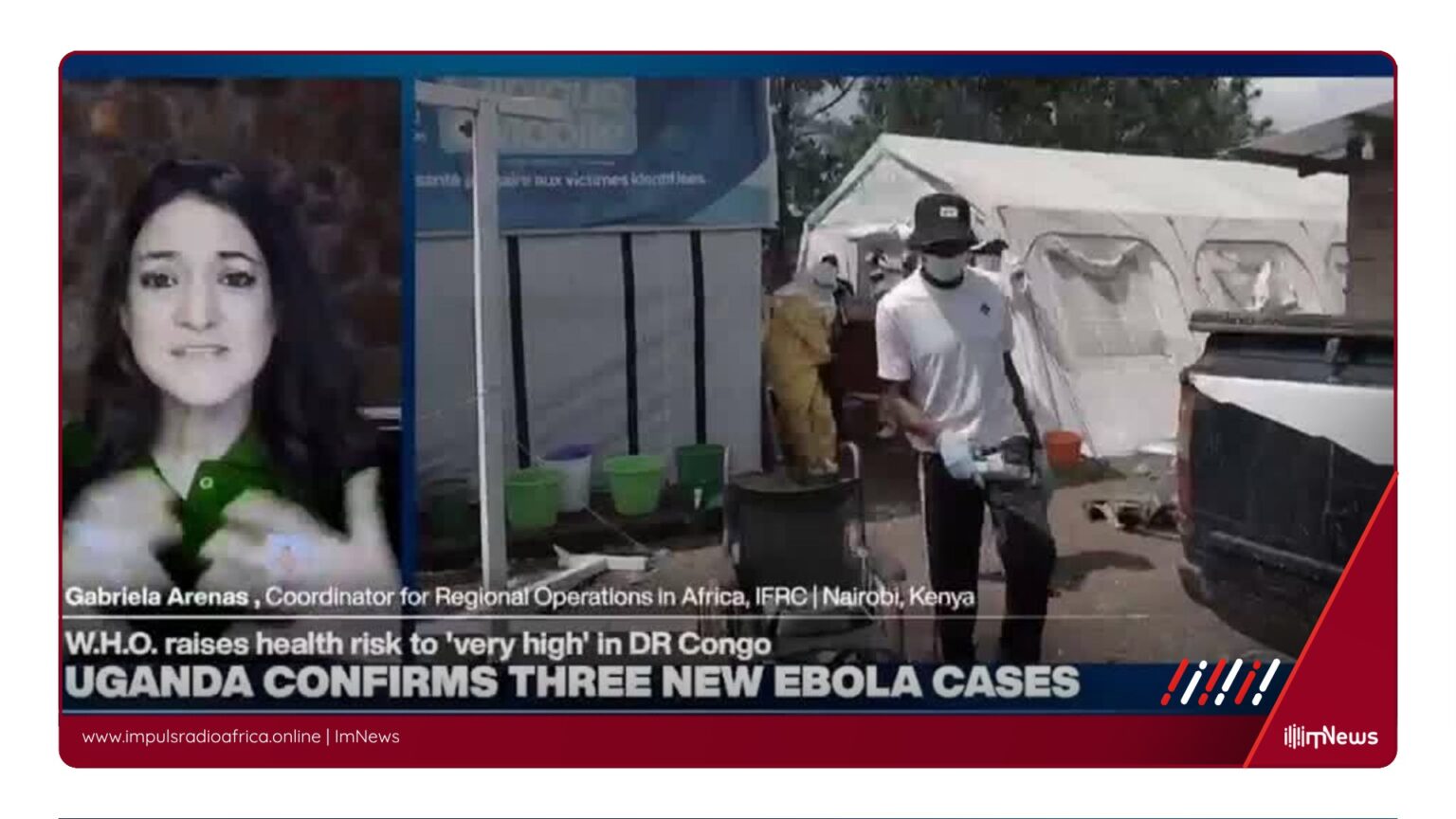
Ebola Outbreak in DR Congo and Uganda Escalates to ‘Very High’Risk, Urgent Response Required BODY: Nairobi, Kenya – The World Health Organization (WHO) has raised the health risk to ‘very high’in the Democratic Republic of the Congo (DRC) and Uganda due to an Ebola outbreak caused by the Bundibugyo virus, marking a critical escalation in the ongoing crisis.
As of May 2026, the situation has become increasingly dire with 8 laboratory-confirmed cases, 246 suspected cases, and 80 suspected deaths reported in Ituri Province of the DRC.
The severity of the outbreak has prompted the Serum Institute of India to mass produce a new Ebola vaccine developed by Oxford University, which is poised for clinical trials within two to three months.
The UN has responded with urgency, rushing emergency personnel, funding, and supplies into eastern DRC to counter the fast — growing Ebola outbreak.
The UN relief chief has allocated up to $60 million for the response, reflecting the gravity of the situation and the need for a coordinated international effort.
The DRC has a history of Ebola outbreaks, with the Bundibugyo virus being a rare but dangerous strain.
The region’s challenges are compounded by ongoing conflict, which hampers effective public health responses and contributes to the rapid spread of the disease.
The WHO’s decision to raise the risk assessment to ‘very high’reflects the urgency of the situation in DRC and the potential for international spread. While the global risk remains ‘low’, the situation in the region is serious, as evidenced by the mass displacement, mistrust of outside authorities, and outbreaks of violence in response to public health measures.
The WHO’s Director-General, Dr. Tedros Adhanom Ghebreyesus, has emphasized the need to build trust, warning that violence and insecurity in the war-ravaged region are hampering the response to the Ebola outbreak.
The outbreak is unfolding in Ituri and North Kivu provinces, regions long scarred by armed violence and humanitarian crises.
The situation is further complicated by the intensified fighting, mass displacement, and deep mistrust of outside authorities, fuelled by rumours and misinformation.
The WHO has deployed additional personnel to the epicentre of the outbreak in Ituri province to support affected communities.
The UN and its partners are also preparing clinical trials for experimental Ebola treatments and potential vaccines targeting the Bundibugyo strain, highlighting the urgency of finding effective solutions.
The Red Cross is mobilizing volunteers to carry out door — to-door awareness campaigns and mobilize safe and dignified burial procedures, an essential aspect of controlling the spread of the disease.
The situation in Uganda, where there have been two confirmed cases of the Bundibugyo species and one death, is also being closely monitored.
The Ebola outbreak in the DRC and Uganda underscores the need for a robust and coordinated international response to emerging health crises.
The urgency of the situation calls for increased funding, resources, and international cooperation to contain the outbreak and protect vulnerable populations.
*Additional reporting by ImNews | Sources consulted: 5*
—
This original article was produced by the ImNews editorial team
Source: france24 – Africa
Source: FRANCE24