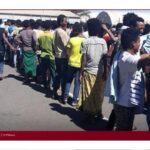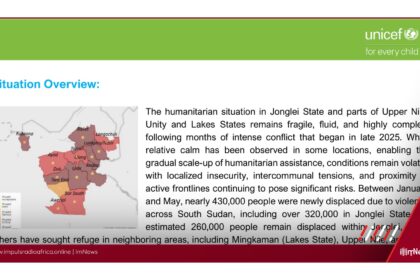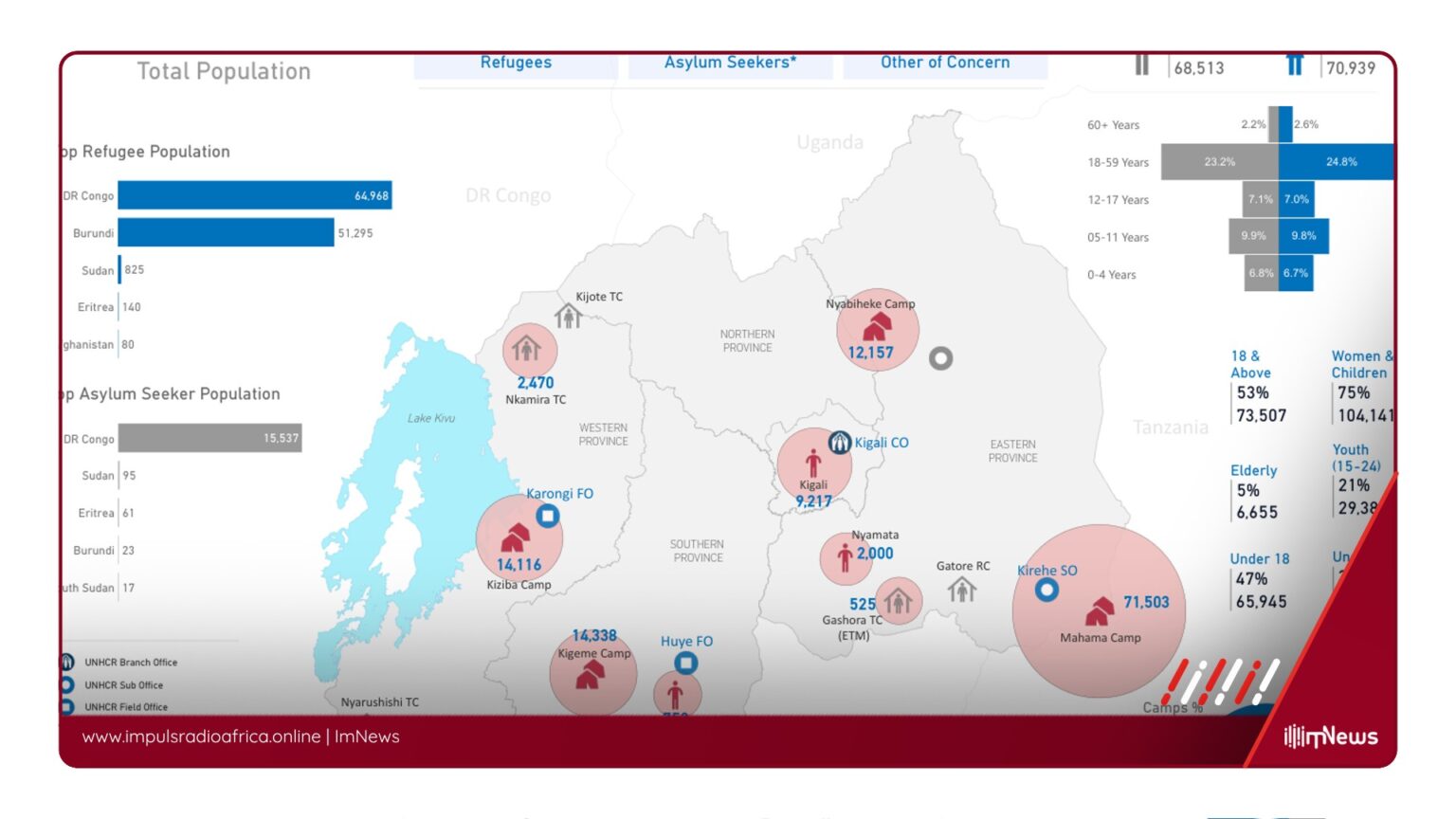
Kigali, Rwanda — As of 30 June 2026, Rwanda hosts a total of 139,452 forcibly displaced persons, according to the latest data from the United Nations High Commissioner for Refugees (UNHCR).
The majority of these individuals, accounting for 60. 6% or 84,563, originate from the neighboring Democratic Republic of the Congo.
Another 38.
4%, or 53,486 individuals, are from Burundi.
A smaller proportion, 0.
9%, or 1,202 individuals, are from Eritrea. Rwanda’s role as a sanctuary for forcibly displaced persons is a reflection of the complex regional dynamics in the Great Lakes region of East Africa.
The UNHCR, established in 1950, is responsible for aiding and protecting refugees, forcibly displaced communities, and stateless people.
The agency’s data underscores the significant contribution of neighboring countries to Rwanda’s forcibly displaced population.
The data, however, does not delve into the specific reasons behind the displacement or the conditions under which these individuals were forced to leave their homes.
The lack of detailed analysis leaves gaps in understanding the root causes and the humanitarian impact of the displacement.
The forcibly displaced persons are spread across various camps and urban areas in Rwanda. Mahama Camp, located in Kigali, is home to the largest number, with 51. 3% of the total population.
Other significant camps include Kigeme, Kiziba, Mugombwa, Nyabiheke, and Nyamata.
The UNHCR’s role in Rwanda is multifaceted, encompassing not just the provision of assistance but also the facilitation of voluntary repatriation, local integration, or resettlement to a third country.
The agency’s efforts are crucial in ensuring that forcibly displaced persons receive the necessary support to rebuild their lives.
While the UNHCR’s data provides a snapshot of the current situation, it is essential to understand the broader context of regional instability and conflict that has led to the displacement of thousands of people.
The presence of forcibly displaced persons in Rwanda is a testament to the challenges faced by the Great Lakes region and the need for sustainable solutions to the root causes of displacement.
As Rwanda continues to host a significant number of forcibly displaced persons, the question of long — term solutions remains paramount.
The UNHCR’s work in Rwanda is a critical part of this effort, but it is clear that a comprehensive approach involving regional cooperation and stability is necessary to address the underlying issues.
The next steps for Rwanda and the international community will be to explore ways to support the forcibly displaced persons in their journey towards sustainable solutions, whether through repatriation, local integration, or resettlement.
The UNHCR’s data serves as a crucial reference point in this ongoing process, highlighting the scale of the challenge and the need for continued attention and support.
*Additional reporting by ImNews | Sources consulted: 5*
—
This original article was produced by the ImNews editorial team
Source: reliefweb
Source: UN High Commissioner for Refugees