Kinshasa, DRC — July 11, 2026 – The ongoing Ebola outbreak in the Democratic Republic of Congo (DRC) has reached alarming proportions, with a recent analysis by the Health Cluster highlighting severe response gaps in the affected regions.
The outbreak, caused by the Bundibugyo species of Ebola, has impacted five provinces, including Haut Uele, Ituri, Nord Kivu, Sud Kivu, and Tshopo, with 42 health zones under the virus’s siege.
The analysis indicates that operational challenges, particularly in regions with limited access and heightened insecurity, are hindering the response efforts.
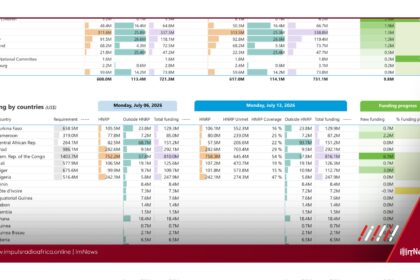
In Ituri, the epicenter of the disease, 10 health zones are in critical condition, with response gaps exceeding 86% in 16 of the 21 pillars of the response, including medical supplies, human resources, and community engagement.
The World Health Organization (WHO) has been scaling up support to the DRC and neighboring Uganda, enhancing surveillance, contact tracing, clinical preparedness, supply delivery, and community engagement.
On July 2, 2026, the WHO added the first diagnostic test for the Bundibugyo Ebola virus to its Emergency Use Listing, aiming to improve diagnosis speed and accuracy. Despite these efforts, the WHO emphasizes the importance of community engagement in controlling the outbreak, as informed and active participation of local populations is crucial for successful responses.
The Centers for Disease Control and Prevention (CDC) has assessed the overall risk to the American public and travelers from this outbreak as low.
The Health Cluster’s analysis serves as a critical guide for the DRC government and its partners to focus on the most pressing needs and improve the effectiveness of the response.
As the crisis continues, a coordinated, comprehensive approach addressing the identified gaps is paramount for containing the outbreak and preventing further spread.
*Additional reporting by ImNews | Sources consulted: 5*
—
This original article was produced by the ImNews editorial team
Source: reliefweb
Source: Health Cluster