Nairobi, Kenya — As of June 2026, Eastern Africa is addressing one of the most severe humanitarian crises in the world, with Sudan at the forefront of this escalating disaster.
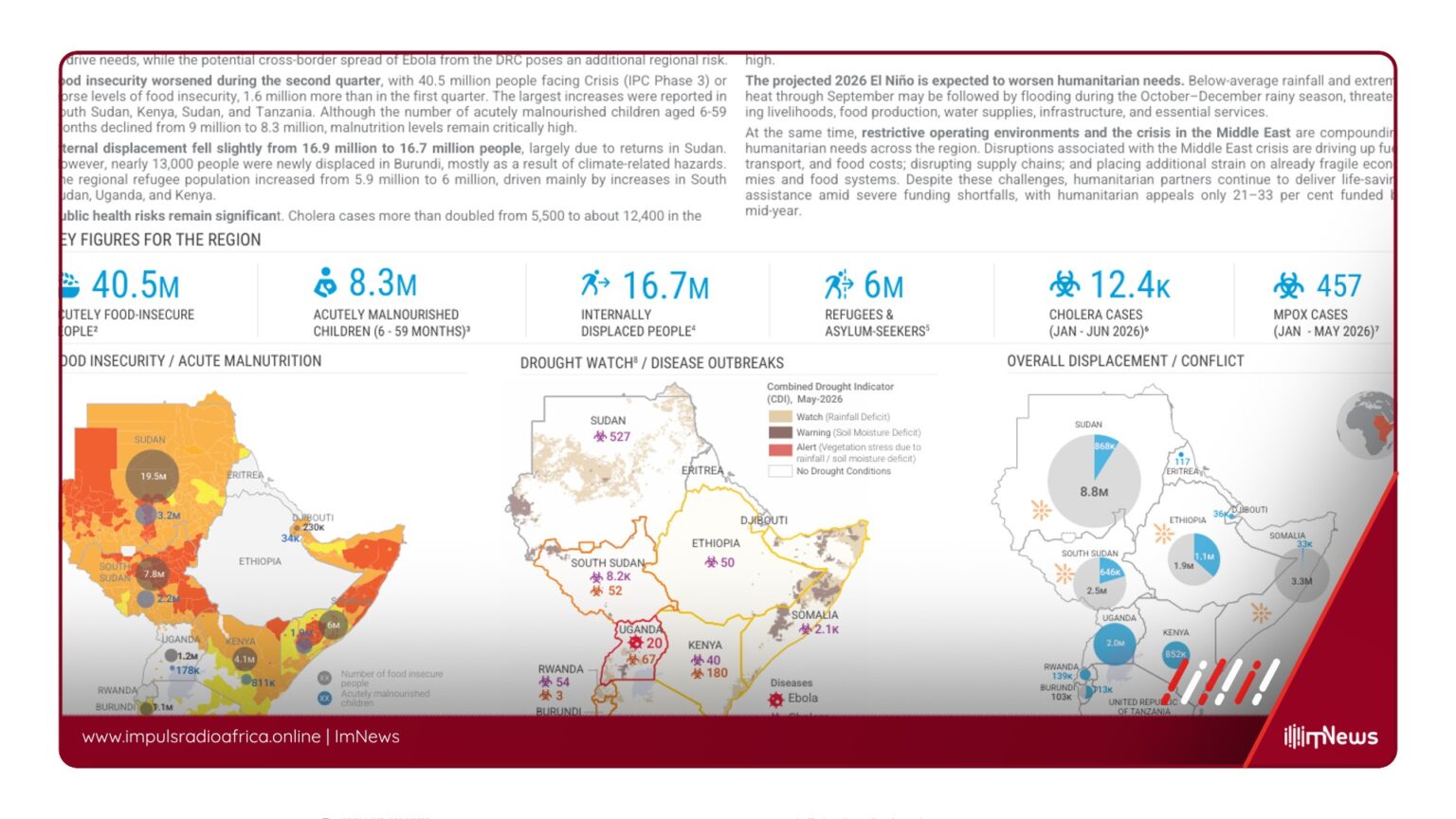
The region is home to over 48. 5 million people in need of assistance, a figure that represents a significant portion of the global humanitarian caseload. Sudan’s situation is particularly dire, accounting for 10 percent of the global total of people in need.
More than 9 million internally displaced people are struggling to survive amidst ongoing conflict. Despite a slight decline in the number of acutely malnourished children aged 6-59 months, from 9 million to 8. 3 million, malnutrition levels remain critically high.
The Sudan Humanitarian Fund has been instrumental in providing relief to affected communities, supporting the establishment of community kitchens in Gedaref State, which have been instrumental in providing food assistance to those in need.
However, the scale of the crisis remains immense, with significant gaps in access to education, healthcare, and other essential services.
The United Nations Office for the Coordination of Humanitarian Affairs (OCHA) has reported an alarming rise in food insecurity in the region.
The humanitarian situation in Eastern Africa is a complex tapestry of challenges, with each country facing its own set of problems.
In Burundi, Rwanda, Tanzania, and Uganda, overlapping humanitarian hazards including refugee influxes, climate shocks, food insecurity, and recurrent disease outbreaks are exacerbating the crisis.
The potential cross — border spread of Ebola from the Democratic Republic of Congo (DRC) poses an additional regional risk, testing the resilience of the region. Despite these challenges, humanitarian organizations such as OCHA and the Sudan Humanitarian Fund are actively supporting communities through various initiatives, including food assistance, cash and voucher assistance, and support to community-led organizations.
The humanitarian outlook in Eastern Africa is bleak, with the potential for further deterioration due to the projected 2026 El Niño, which is expected to worsen humanitarian needs.
The region’s stability and prosperity depend on a coordinated and effective humanitarian response that addresses the root causes of the crisis and provides essential support to those in need.
*Additional reporting by ImNews | Sources consulted: 5*
—
This original article was produced by the ImNews editorial team
Source: reliefweb
Source: UN Office for the Coordination of Humanitarian Affairs