Dar es Salaam, Tanzania — As of 30 June 2026, Tanzania is addressing the hosting of a significant number of refugees and asylum seekers, with the majority hailing from neighboring countries such as Burundi and the Democratic Republic of Congo (DRC), due to ongoing conflicts and violence.
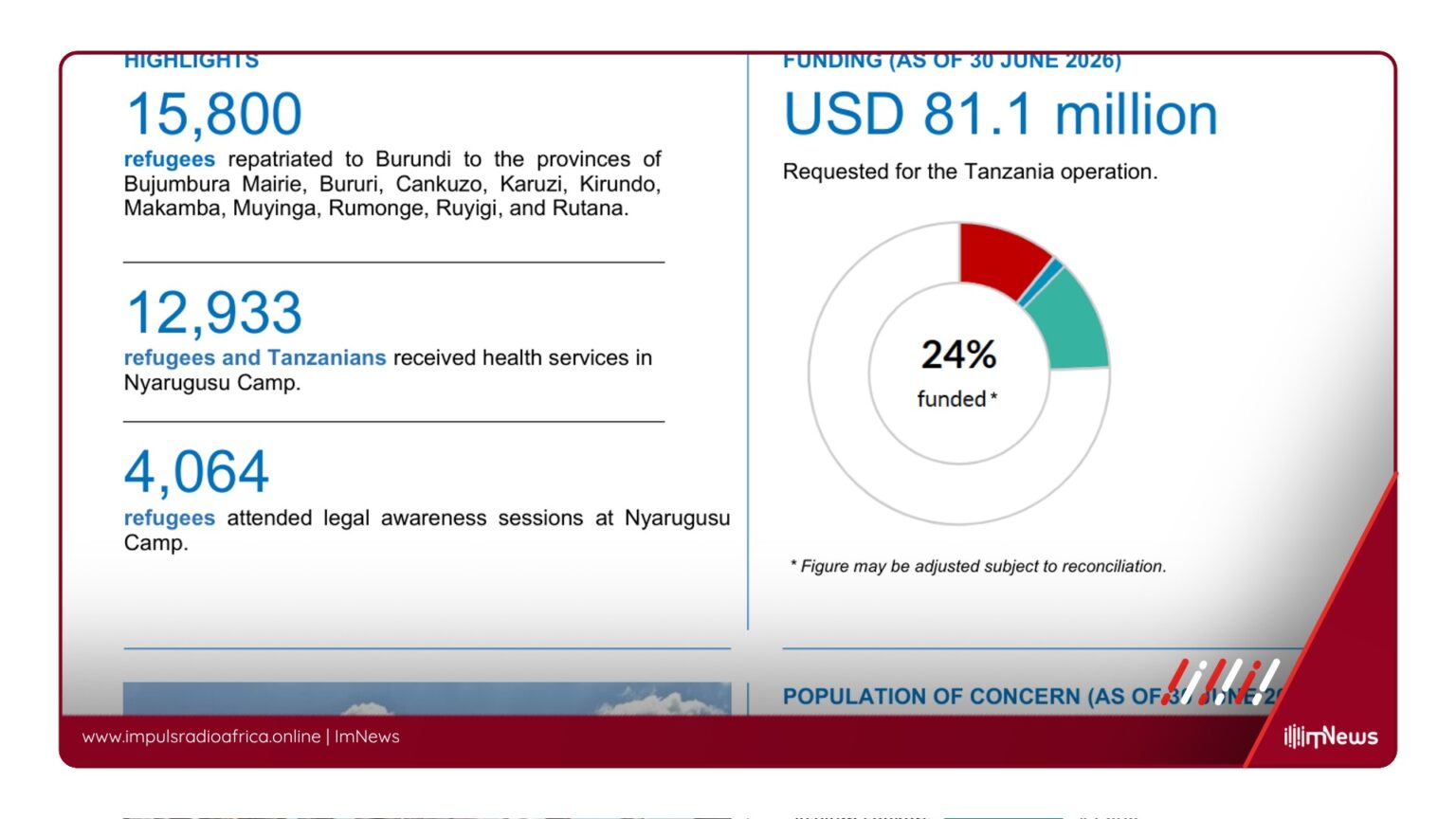
The United Nations High Commissioner for Refugees (UNHCR) has reported that the number of refugees and asylum seekers in Tanzania has reached 131,034, with the Nyarugusu Camp in the Kigoma region serving as the focal point, home to 89,808 refugees and asylum seekers. Since the renewed violence in the eastern DRC in January 2025, the camp has received 62 new arrivals, bringing the total number of arrivals to 4,391.
The Tanzanian government, in collaboration with the UNHCR and other partners, is actively involved in providing assistance to these individuals, adhering to the 1951 Refugee Convention Relating to the Status of Refugees and its 1969 OAU Refugees Convention.
The influx of refugees has placed a strain on the resources of Nyarugusu Camp, particularly in the healthcare sector.
The situation at the camp is critical, as revealed by SOS Médias Burundi, which reported that the only hospital operational in the camp is overwhelmed, struggling to accommodate thousands of Burundian and Congolese refugees seeking medical attention.
The UNHCR’s Operational Update from June 2026 outlines the challenges faced by the camp, including support from various organizations like the Food and Agriculture Organization, HelpAge International, and the International Organization for Migration. Despite these challenges, the UNHCR’s data indicates a steady increase in the number of refugees and asylum seekers in Tanzania.
The rise in numbers reflects the ongoing conflicts in the region, which have forced thousands to seek refuge in neighboring countries.
As Tanzania continues to bear the brunt of hosting a large displaced population, the need for sustainable solutions to address the root causes of displacement remains critical.
The UNHCR and its partners are working towards solutions that provide immediate relief while promoting long — term stability and resilience within host communities.
The Nyarugusu Camp serves as a microcosm of the broader displacement crisis in the region, highlighting the complex challenges faced by both displaced populations and those working to assist them.
*Additional reporting by ImNews | Sources consulted: 5*
—
This original article was produced by the ImNews editorial team
Source: reliefweb
Source: UN High Commissioner for Refugees