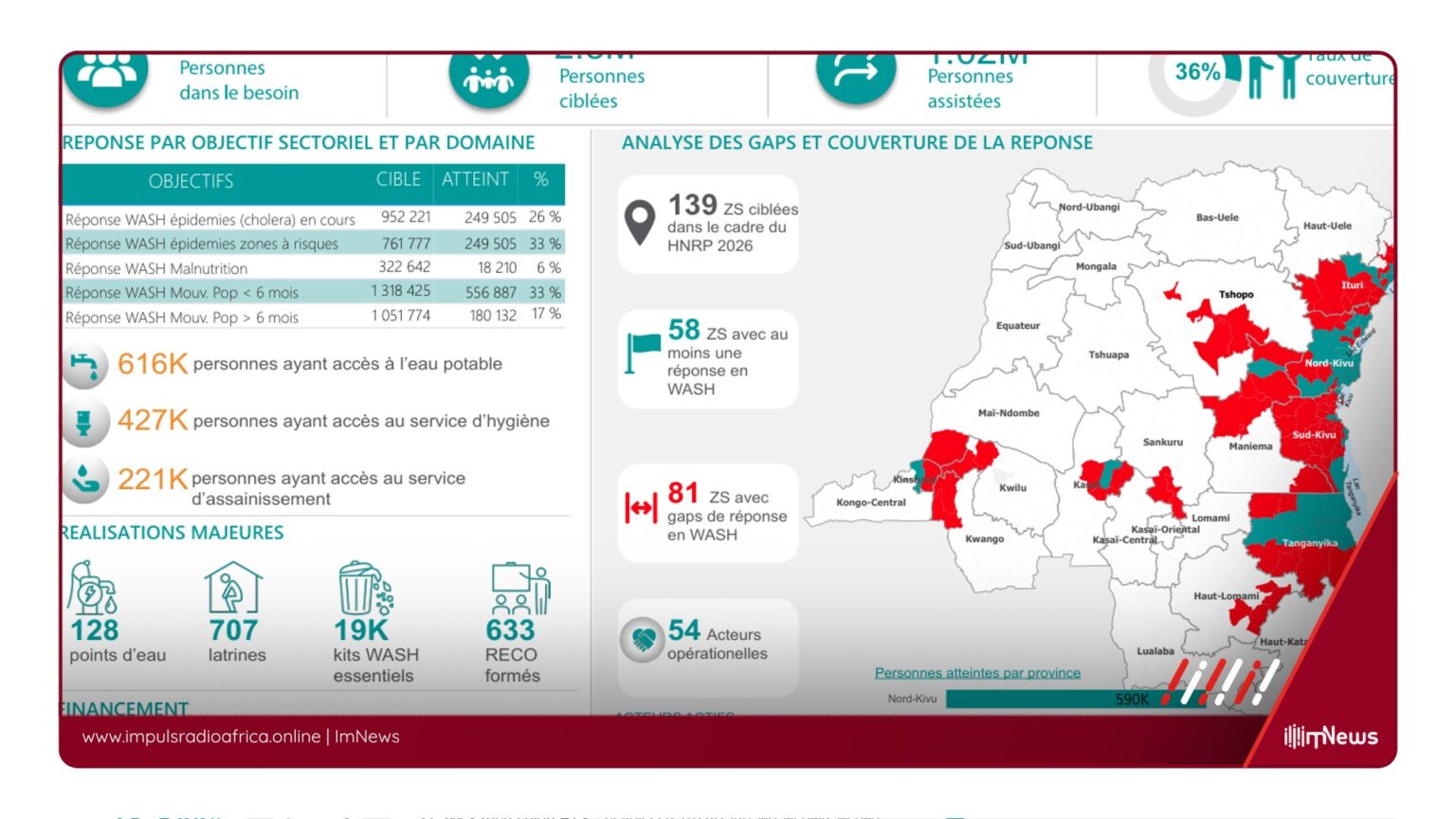
DRC’s WASH Cluster Struggles with Funding Shortfalls Amid Water Crisis BODY: Kinshasa, DRC – The Democratic Republic of Congo (DRC) is facing a critical water, sanitation, and hygiene (WASH) crisis, with the WASH Cluster in the country having reached only about 25% of its targeted 2. 8 million individuals in the 2026 Humanitarian Needs and Response Plan (HNRP), according to recent reports.
As of May 2026, the WASH Cluster had assisted 711,871 individuals, but the challenges remain daunting.
The DRC’s water crisis is exacerbated by ongoing conflict and insecurity, which have disrupted access to essential services. Despite the country’s vast water resources, access to clean water and proper sanitation facilities remains limited.
The national water coverage stands at 56%, with urban areas at 66% and rural areas at just 47% access to safe drinking water.
The WASH Cluster reports that they are struggling to meet the basic needs of millions due to significant challenges and limited funding.
As of May 2026, the required funding for the WASH Cluster was $80. 1 million, but only about 13.
2% of this amount was secured.
This funding shortfall has severely limited the Cluster’s ability to scale up its operations and reach more people in need.
The situation is further complicated by the ongoing cholera epidemic, which has added another layer of urgency to the WASH Cluster’s efforts.
The lack of access to clean water and proper sanitation facilities is a primary factor in the spread of waterborne diseases such as cholera, and the WASH Cluster is working tirelessly to provide the necessary resources to combat the epidemic. Despite the challenges, the WASH Cluster has made significant progress.
The Cluster’s efforts have resulted in the construction of new water points, the distribution of hygiene kits, and the training of local communities on WASH practices.
However, the scale of the crisis requires a more substantial and sustained response.
The DRC’s water crisis is not only a humanitarian issue but also an economic one.
The lack of access to clean water and proper sanitation facilities has a significant impact on the country’s productivity and economic growth.
Businesses and industries are unable to operate at full capacity due to the water crisis, and the country’s agricultural sector is also suffering due to the lack of access to irrigation water.
The international community has recognized the severity of the situation and is working to provide support to the DRC.
The World Bank, for instance, has been instrumental in providing funding and technical assistance to improve water and sanitation services in the country.
The ICRC has also been actively involved in providing support to the WASH Cluster, focusing on long — term sustainable solutions.
The DRC’s water crisis is a complex and multifaceted issue that requires a coordinated and comprehensive response.
The WASH Cluster is doing its best to meet the needs of the population, but it cannot do it alone.
The international community must continue to support the efforts of the WASH Cluster and other local and international organizations working to address the crisis.
As the situation evolves, it is essential to monitor the progress of the WASH Cluster and the impact of the interventions being implemented.
The success of the WASH Cluster’s efforts will depend on the continued support of the international community and the commitment of the DRC government to address the root causes of the water crisis.
Kinshasa, DRC — The Democratic Republic of Congo’s water, sanitation, and hygiene crisis continues to pose significant challenges to the country’s population and economy.
The WASH Cluster’s efforts to provide assistance to those in need have been impressive, but the scale of the crisis requires a more substantial and sustained response.
The international community must continue to support the WASH Cluster and other organizations working to address the crisis, ensuring that the DRC’s most vulnerable populations have access to clean water and proper sanitation facilities.
*Additional reporting by ImNews | Sources consulted: 5*
—
This original article was produced by the ImNews editorial team
Source: reliefweb
Source: UN Children's Fund