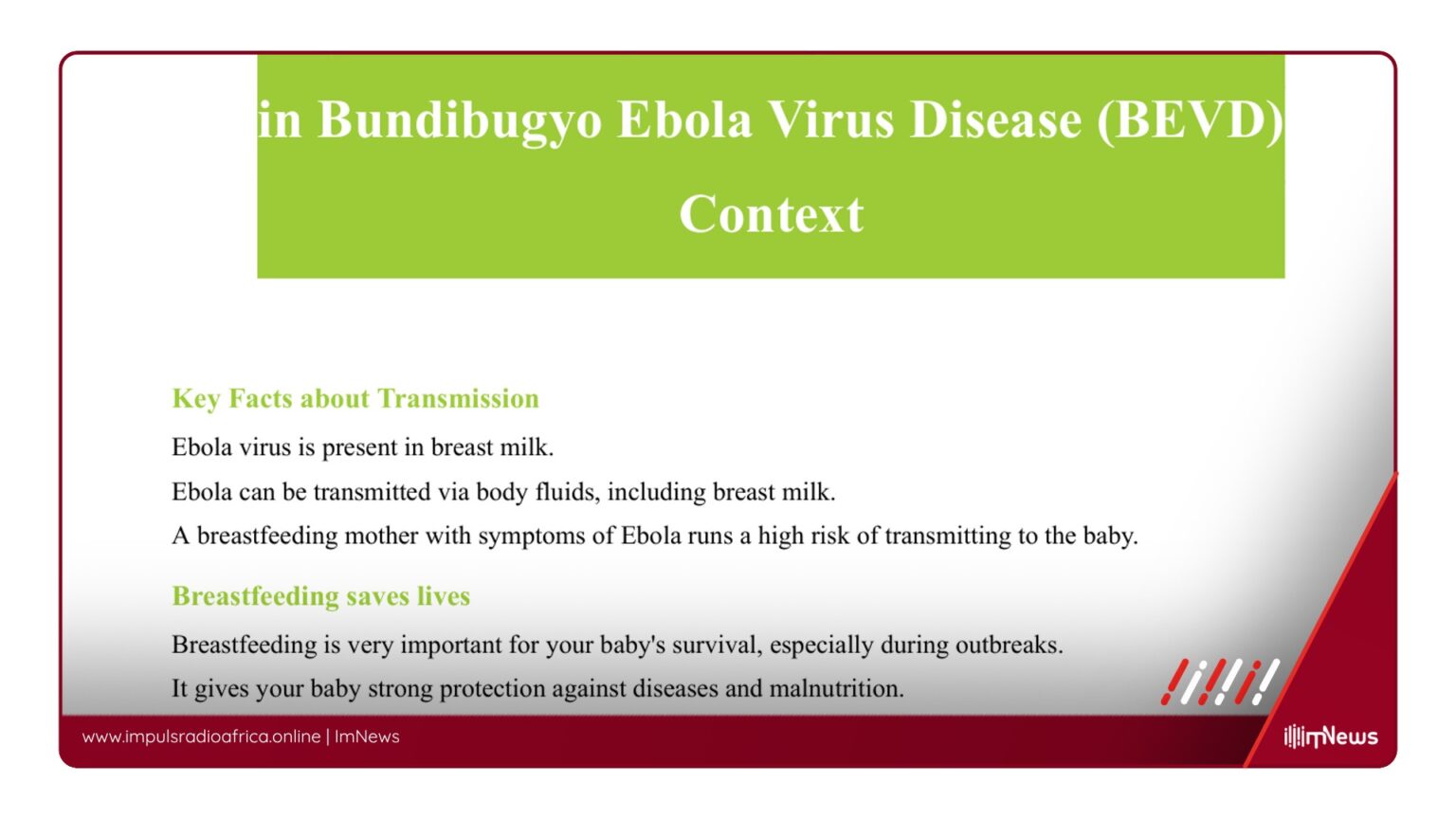
Bundibugyo, South Sudan — In the face of the Ebola Virus Disease (EVD) outbreak in Bundibugyo, the Nutrition Cluster in South Sudan is emphasizing the importance of breastfeeding amidst the ongoing humanitarian crisis. Key messages from the Nutrition Cluster highlight that breastfeeding is crucial for infants’survival, particularly during outbreaks. It provides strong protection against diseases and malnutrition, and is safe to continue unless the mother has Ebola.
For mothers who are healthy and symptom — free, the Nutrition Cluster advises to breastfeed their babies as normal, starting within the first hour after birth. Exclusive breastfeeding for the first six months, followed by continued breastfeeding with appropriate complementary foods up to two years of age, is recommended.
However, if a mother is diagnosed with EVD, the Nutrition Cluster advises stopping breastfeeding immediately. This is to prevent the transmission of the virus through breast milk. Despite the challenges posed by the EVD outbreak, the Nutrition Cluster has been able to disseminate these messages to a significant number of communities.
However, access to clean water and sanitation facilities remains a critical issue, which is crucial for maintaining hygiene standards for both mothers and infants.
The situation in South Sudan is further complicated by a severe food insecurity situation, with the Integrated Food Security Phase Classification (IPC) analysis projecting that 7. 8 million people would face crisis level hunger or worse between April and July 2026.
The Food Security and Nutrition Monitoring Survey (FSNMS) indicates a 26% increase in the risk of acute malnutrition among children under five compared to 2024.
The World Food Programme (WFP) faces a USD 355 million funding shortfall for 2026, which threatens essential services, including nutrition support for crisis-affected populations.
The Ebola outbreak has disrupted access to food and clean water for many families, directly impacting breastfeeding practices.
The Nutrition Cluster and its partners are working tirelessly to ensure that mothers and their children receive the necessary support to survive and thrive amidst these unprecedented challenges. With continued support from the international community, there is hope that the nutritional needs of the population in South Sudan can be met, even amidst the ongoing crisis.
*Additional reporting by ImNews | Sources consulted: 5*
—
This original article was produced by the ImNews editorial team
Source: reliefweb
Source: Nutrition Cluster