BANGUI, Central African Republic — The Central African Republic (CAR) is facing a dual challenge of acute food insecurity and ongoing conflict, particularly in the Vakaga region, as efforts to stabilize the nation continue.
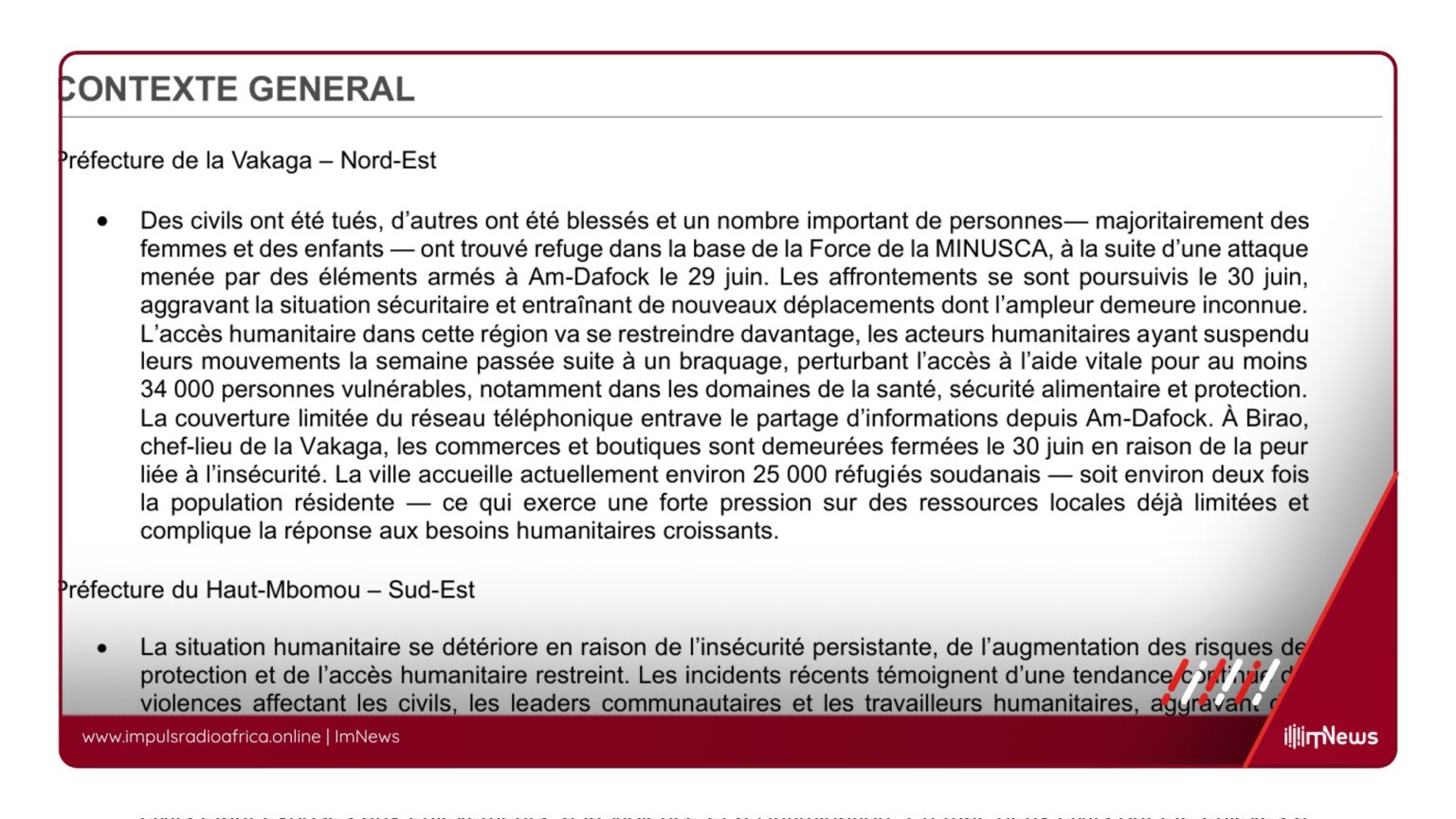
In the Vakaga region, recent attacks in Am — Dafock have resulted in deaths, injuries, and the displacement of a significant number of people, predominantly women and children.
The situation has been exacerbated by the continued violence and access constraints, leading to the suspension of humanitarian movements in the area. This has left at least 34,000 vulnerable individuals without vital aid, including in health, food security, and protection. Despite these challenges, the CAR has been attempting to stabilize following a decade of instability.
This includes elections, the partial demobilization of armed groups, and the gradual resumption of institutions.
However, Amnesty International has reported ongoing illegal attacks and homicides, and gender — based violence remains prevalent.
In the Haut — Mbomou region, the humanitarian organization CATDEC has provided monetary assistance to 249 households, aimed at improving the subsistence of the most vulnerable individuals.
In the Ouham — Péndé region, the CHRAM has conducted mobile medical clinics, offering consultations on maternal and child health, and addressing malnutrition.
The food security situation in the CAR remains critical, with over 2 million people experiencing acute food insecurity, including 262,000 in emergency conditions.
However, better rainfall and stronger agricultural production, along with humanitarian food assistance, have mitigated the situation somewhat.
As the CAR grapples with these challenges, the international community must remain vigilant and supportive of the nation’s stabilization efforts, ensuring that the needs of its people are met amidst the ongoing crisis.
*Additional reporting by ImNews | Sources consulted: 5*
—
This original article was produced by the ImNews editorial team
Source: reliefweb
Source: UN Office for the Coordination of Humanitarian Affairs