DATELINE: Kinshasa, DRC – July 2, 2026 LEDE: The Democratic Republic of Congo (DRC) is facing a dual crisis as it grapples with its 17th Ebola outbreak and the nation’s worst food security situation in decades. NUT GRAF: The Ebola outbreak declared in May 2026, caused by the Bundibugyo strain, has escalated into a Public Health Emergency of International Concern (PHEIC), according to the World Health Organization (WHO).
Meanwhile, the World Food Programme (WFP) reports that an estimated 26.
5 million people in the DRC, including 10 million in eastern provinces, are facing acute food insecurity.
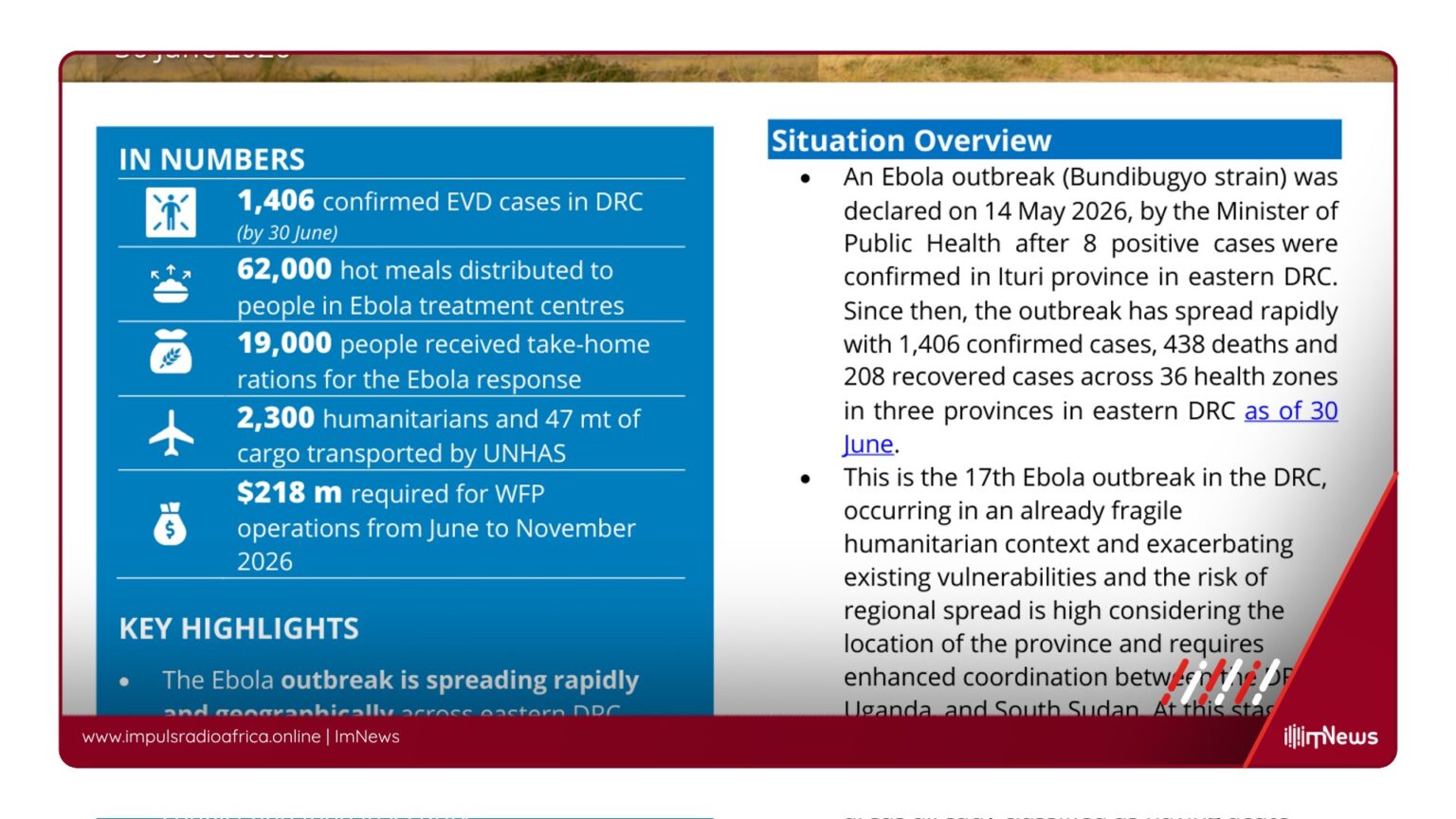
The Ebola Outbreak and Public Health Emergency The 17th Ebola outbreak in the DRC since its identification in 1976 was declared a PHEIC by the WHO on May 17, 2026, marking the first time the virus has reached this level of international concern in the region.
The outbreak is currently confined to the DRC, Uganda, and France, with 1,333 confirmed cases and 399 deaths as of June 29, 2026.
The situation is complicated by the remote and densely populated areas in Ituri Province, which pose challenges for response teams.
This includes $10 million from the Global Financing Facility, which aims to support the health response, contain the spread of disease, and protect vulnerable communities.
The funds will also be used to preserve essential health services during the crisis. Community Engagement and Resilient Health Systems The WHO emphasizes the critical role of community engagement in controlling outbreaks, stating that only through community involvement can such health emergencies be effectively addressed.
The World Bank Group, too, underscores the importance of resilient health systems, aiming to reach 1. 5 billion people with quality, affordable health services by 2030.
The Humanitarian Crisis and Food Security Amid the health emergency, the DRC is also battling a severe food security crisis.
The WFP reports that an estimated 26. 5 million people, including 10 million in eastern provinces, are facing acute food insecurity. This situation is further exacerbated by the Ebola outbreak, which has disrupted agricultural activities and trade movements, leading to rising food prices and scarcity.
Challenges in Ituri Province The volatile security situation in Ituri Province poses significant challenges for humanitarian operations. Recent attacks by local armed groups have forced thousands of civilians to flee their homes, disrupting the delivery of much-needed aid.
The International Committee of the Red Cross (ICRC) has distributed food to thousands of people who have returned home, providing essential items to vulnerable populations.
STATISTICS: – 1,333 confirmed Ebola cases and 399 deaths in the DRC.
– 26. 5 million people facing acute food insecurity in the DRC.
– Over 1 million displaced in Ituri Province.
ENDING: The DRC’s dual crisis of Ebola and food insecurity highlights the interconnectedness of public health and economic development.
As the international community responds to the crisis, it is crucial to prioritize both the health and well — being of affected populations and the sustainable development of the nation.
Worldbank. Afro.
Who.
*Additional reporting by ImNews | Sources consulted: 5*
—
This original article was produced by the ImNews editorial team
Source: reliefweb
Source: World Food Programme