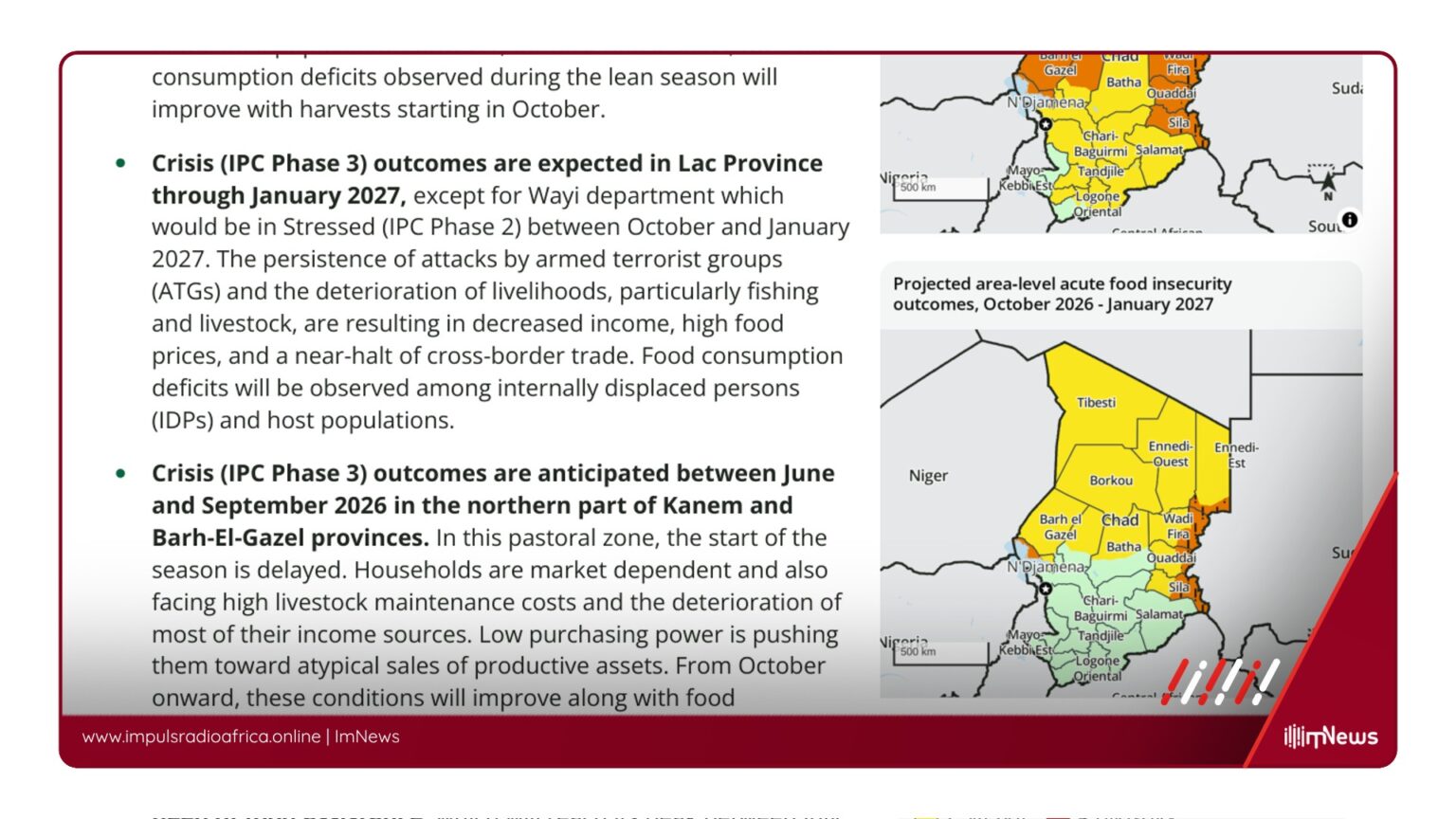
Chad’s Eastern Region Grapples with Ongoing Food Crisis Despite Harvests BODY: Khartoum, Sudan — Despite the October harvest in eastern Chad, the Food Early Warning System Network (FEWS NET) has reported that Crisis (IPC Phase 3) outcomes are expected to persist through January 2027.
The departments of Assoungha, Kimiti, Wadi Hawar, Dar — Tama, and Kobé remain among the most affected areas.
The situation is exacerbated by the influx of Sudanese refugees, Chadian returnees, and internally displaced persons (IDPs) in the Lac Province, which has placed significant strain on local resources and social services. Attacks from non-state armed groups (NSAGs) and flooding have further deteriorated the situation, with over 30 percent of the population in affected areas being entirely deprived of their livelihoods. FEWS NET estimates that 2.
5-2. 99 million people will be in need of food assistance, with the peak expected between July and September 2026.
The arrival of displaced populations has increased competition for limited work opportunities, further impacting food security. While some areas like Wayi in the Lac Province may transition from Crisis (IPC Phase 3) to Stressed (IPC Phase 2) during the lean season, the overall food insecurity remains high.
The International Organization for Migration (IOM) and the World Food Programme (WFP) are actively involved in providing assistance and addressing the underlying drivers of instability and conflict.
The persistence of Crisis (IPC Phase 3) outcomes underscores the need for sustained humanitarian assistance and a coordinated approach to address the complex challenges facing the region.
*Additional reporting by ImNews | Sources consulted: 4*
—
This original article was produced by the ImNews editorial team
Source: reliefweb
Source: Famine Early Warning System Network